Scam Alert: How AI Voice Scams Turn a 10-Second Audio Clip Into a Fake Kidnapping
Scam Alert: How AI Voice Scams Turn a 10-Second Audio Clip Into a Fake Kidnapping
Introduction: The New Reality of Vishing (Voice Phishing)
The landscape of cybercrime has evolved rapidly, moving beyond basic email phishing and data breaches into highly personalized, emotionally devastating attacks. The AI voice cloning scam represents the cutting edge of social engineering, weaponizing advanced technology to exploit the strongest human vulnerability: the instinct to protect loved ones.1 This predatory threat is a highly sophisticated form of
vishing (voice phishing), where criminals utilize synthetic audio to impersonate family members, colleagues, or trusted authorities.2
Imagine answering the phone and hearing the panicked, crying voice of your child or grandchild claiming they have been in a severe accident or arrested. This immediate, visceral shock is the foundation of the AI scam.1 Unlike traditional imposter scams that relied on flimsy backstories and generic voices, modern AI tools generate speech that mimics the specific tone, pitch, and emotional nuance of a particular speaker, even requiring minimal training data.3
This technology is not theoretical; it is operational and causing significant financial trauma. Americans recently lost nearly $3 billion in 'imposter scams' alone, a figure driven higher by the difficulty in detecting these AI-enabled deepfakes.4 Older adults, in particular, have experienced a four-fold increase in reports of losing $10,000 or more since 2020, often sacrificing their entire life savings to scammers impersonating relatives or government agencies.4
This expert report provides a detailed analysis of the mechanics behind AI voice cloning scams, explores the psychological exploitation tactics used, and delivers a definitive, multi-layered defense protocol—focused on independent verification and proactive hygiene—necessary to safeguard families and financial assets from this emerging form of identity-based fraud.
Section 1: The Anatomy of a Deepfake Voice Scam: Technical Feasibility Meets Psychological Exploitation
Understanding the threat requires comprehending how artificial intelligence transforms publicly available data into a high-fidelity tool for deception. This sophisticated fraud relies on a seamless blend of automated voice generation and time-tested social engineering principles.
1.1. Technical Threat: How AI Steals Your Identity from the Internet
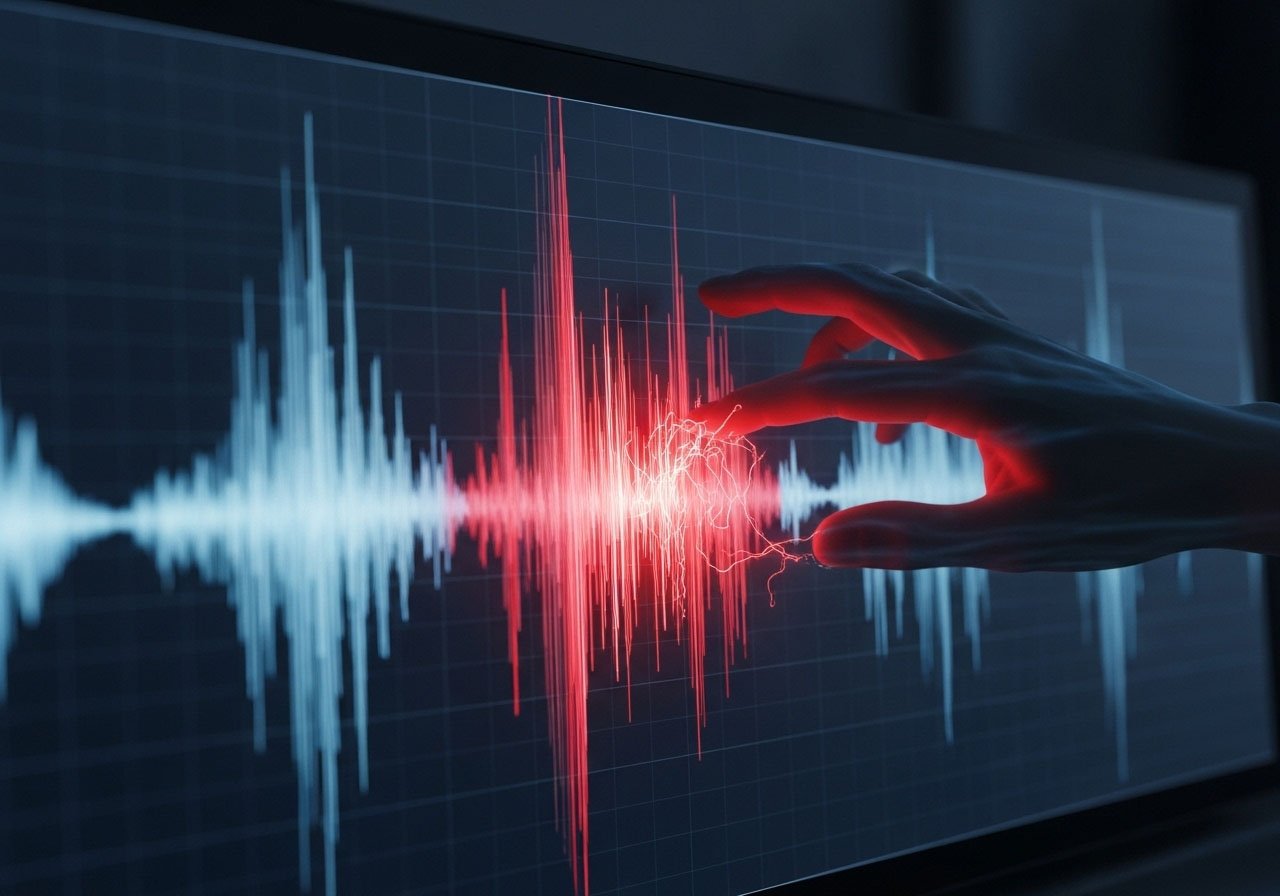
The alarming reality of AI voice cloning is the speed and minimal input required to create a convincing forgery. Modern deep learning tools enable scammers to replicate a person's voice using as little as 5 to 15 seconds of audio.3 This audio is easily harvested from public digital footprints, including short social media videos (from platforms like Instagram or TikTok), recorded interviews, podcasts, or even personalized voicemail greetings.6
The core technology relies on two advanced concepts: voice embeddings and Generative Adversarial Networks (GANs).
- Voice Embeddings and Vocal Biomarkers: Instead of training a new model for every speaker, AI uses voice embedding techniques. The system analyzes the scraped audio sample, extracting key vocal characteristics—known as vocal biomarkers—such as pitch, tone, rhythm, speech pace, and pronunciation.3 This analysis creates a digital blueprint of the target's unique voice, allowing the AI to adapt its text-to-speech (TTS) system to reproduce new speech in the target's specific vocal identity.3
- Generative Adversarial Networks (GANs): GANs are often employed for generating hyper-realistic synthetic content. In the context of voice cloning, a Generator network creates the audio output based on a script typed by the scammer. Simultaneously, a Discriminator network judges the synthesized audio against the original voice sample, identifying flaws and driving the Generator to rapidly refine the forgery until it achieves a high level of authenticity.7 This process is instantaneous, resulting in a cloned voice that can deliver any script the scammer desires, from a simple conversation to a fabricated plea for help.2
The minimal audio requirement fundamentally changes the security challenge from one of active hacking to one of passive digital harvesting. Since only a few seconds are needed, attackers no longer require data breaches; they rely on public, open-source intelligence (OSINT) gathering. The implication is that defense must now pivot to controlling the family’s public "voice footprint," recognizing that seemingly harmless online content constitutes a significant security risk.8
1.2. The Vicious Sequence of the Emergency Call (The Trap)
The success of the AI voice scam hinges on a rapid, three-phase psychological assault designed to dismantle the victim’s ability to think critically.
Phase 1: The Emotional Trigger
The call begins with the immediate emotional shock caused by the cloned voice, which sounds exactly like the loved one, speaking in extreme distress—often crying, breathless, or claiming an urgent, life-threatening crisis (kidnapping, arrest, or severe car accident).1 This auditory realism instantly invokes panic, leveraging the primal human instinct to protect family members, thereby shutting down the rational defenses that might otherwise trigger skepticism.1
Phase 2: The Authoritative Demand
Before the victim can recover from the emotional shock, a second voice—often synthesized or played by a human actor—takes over. This voice claims an authoritative role, typically posing as a police officer, lawyer, doctor, or, in the case of a kidnapping, the captor. This figure assumes control of the situation and immediately demands specific, irreversible action: the urgent transfer of funds to resolve the crisis and secure the loved one's release or safety.
Phase 3: The Isolation and Payment Loophole
To prevent the victim from verifying the story, the authoritative voice strictly warns the victim not to hang up, contact any other family members, or notify legal authorities. Payment is then demanded exclusively through untraceable methods, such as gift cards, immediate wire transfers (MoneyGram or Western Union), or cryptocurrency.5 The use of these methods is deliberate, as they do not require identification for collection, rendering the lost funds nearly impossible for victims to recover.5
This orchestrated sequence creates a state of engineered emotional paralysis. The AI voice provides the instantaneous conviction, while the strict rules of isolation maintain the high-pressure environment. The scam is effectively a race against the victim’s returning rationality, aiming to extract the payment before the shock subsides enough to permit a logical verification attempt.10 The defense must, therefore, introduce a reliable, non-negotiable interrupt protocol to break this cycle of manipulation.
Section 2: Identifying the Red Flags: Spotting a Digital Imposter
While AI technology is highly sophisticated, the human element of the scam—the manipulation tactics and the logistics of money retrieval—still reveal critical flaws that can be used for detection.
2.1. The Critical Psychological Red Flags (Pressure Tactics)
The most consistent red flags involve the nature of the request and the required method of payment.
- Extreme Urgency and Isolation: Any demand that action must be taken immediately, coupled with instructions not to hang up, call another family member, or verify the situation with official channels, is the hallmark of fraud. Legitimate emergency services or honest family members would encourage, not forbid, verification.
- Demands for Untraceable Funds: This is the clearest sign of a scam. Authentic legal, medical, or government entities will never request fees, bail money, or fines be paid through gift cards, cryptocurrency, or wire transfers.5 The use of these methods is solely intended to ensure the money is received quickly and without a recoverable trace.5
- The Caller ID Problem: The incoming phone number is often unfamiliar, blocked, or flagged by modern security services as a suspicious VoIP (Voice over Internet Protocol) number, even if the voice itself sounds familiar.
2.2. The Technical and Auditory Red Flags
Deepfake technology, while impressive, can sometimes produce subtle auditory anomalies that a skeptical listener can detect.
- Lack of Natural Soundscape: The audio might sound unusually clear, too smooth, or entirely lack background noise. A real phone call from a stressful environment (like a crash scene or a police station) would typically carry associated ambient sounds. A synthesized voice may present a soundscape that is unnaturally clean.7
- Rhythmic Inconsistencies: Occasionally, AI-generated speech may exhibit subtle robotic rhythms, unnatural pauses, or slight shifts in pitch that are inconsistent with the loved one’s typical pattern of speech, especially if the audio quality is poor.3
- Resistance to Complex Questions: Scammers operate using a predetermined script. If the victim asks a specific, complex, or deeply personal question outside of the scammer's prepared narrative, the human actor or the underlying AI system often falters. The "authoritative" figure may become aggressive, defensive, or simply hang up, unable to synthesize a detailed, non-scripted response in real-time.
A comparison of the AI-enhanced attacks to traditional scams illustrates why the new threat requires a fundamentally different defensive posture.
Table 1: Deepfake Voice Scam vs. Traditional Impersonation
The table clarifies that the AI threat primarily weaponizes emotion and speed. Since the AI voice is designed to bypass the listener's skepticism through immediate shock, standard defenses based on evaluating the story’s logic are often too slow to deploy.
Section 3: Fortifying the Human Firewall: The Definitive Multi-Layered Solutions
The most effective defense against AI voice cloning is not technological, but procedural. Families must establish and rehearse protocols that guarantee independent verification before any information or funds are exchanged.
3.1. Layer 1: The Golden Rule of Independent Verification (The Instant Defense)
When faced with a high-pressure, emergency demand, the human mind is predisposed to comply. The only reliable defense is a pre-programmed interruption protocol that breaks the scammer's emotional leverage.1
- Step 1: Hang Up Immediately. The single most crucial action is to end the call immediately. Do not engage, argue, or negotiate. The caller, whether real or synthesized, has one goal: to keep the victim on the line under duress. Ending the call instantly removes the extreme pressure and allows the victim to regain rational thought.10
- Step 2: Call Back on a Known, Verified Number. Crucially, the victim must not call back the number that just called them, as it is controlled by the fraudster. Instead, the victim must call the loved one (or their guardian/spouse) directly using a verified, primary contact number that is stored separately in their phone.2 If the loved one cannot be reached, contacting a third, trusted family member to verify their whereabouts is the necessary contingency. This verification process is foundational to defeating any social engineering attack, whether it is voice-based or delivered via email.
This necessity of independent verification underscores the essential principle of cybersecurity: always verify sensitive requests through a channel separate from the one that delivered the request. Readers interested in broader protection against digital deception can learn more about identifying email-based attacks and verifying communication authenticity.
3.2. Layer 2: Establishing Proactive Family Protocols (The Secret Password)
Pre-emptive measures offer a secure way to confirm identity instantly, even when the voice sounds real. This is particularly vital when protecting older family members, who are disproportionately targeted by imposter scams.5
- The Family Code Word: Families should proactively create a unique, secret password or phrase that is known only to immediate members. This word serves as an authentication key.9 The word selection must be thoughtful: it should be easy for the family to recall but difficult for a scammer to guess, meaning common phrases, pet names, or birth dates should be avoided.11 If a suspicious emergency call occurs, the designated procedure is to ask the caller to state the code word. A scammer, regardless of how advanced their synthesized audio is, will never know this secret, internal password.
- Verification Questions: Alternatively, or in conjunction with the code word, families can agree on specific, complex verification questions (e.g., "What was the name of the summer camp we attended in 2012?") that rely on non-public, shared memories.
The code word protocol is more than just security; it is a mental circuit breaker. It provides a structured, rational task (asking a question) during a moment of profound emotional distress, thereby delaying the payment long enough for the victim's shock to subside and clarity to return.1 This procedural simplicity maximizes compliance under duress, especially for vulnerable populations.
3.3. Layer 3: Long-Term Digital Hygiene and Voice Protection
The first line of defense is ensuring that the source material for cloning is not easily accessible to data harvesters.
- Auditing the Online Voice Footprint: Since scammers harvest audio from public sources, users must audit and strictly restrict privacy settings across all social media platforms (TikTok, Instagram, etc.). Limiting public access to videos and audio recordings of oneself and family members significantly reduces the amount of usable training data available for cloning.2
- Mitigating Voicemail Risk: Personalized voicemail greetings provide clean, easily obtainable audio samples of a person's voice.6 It is recommended to replace personalized, detailed greetings with a generic, short message or to skip the personalized greeting entirely. This reduces the valuable audio sample size available for cloning tools.6
- Enhancing Account Security: Voice cloning scams are a type of vishing that may attempt to trick victims into revealing sensitive account credentials, not just money.2 Therefore, general account security remains paramount. All sensitive online accounts, especially banking and social media, must utilize multi-factor authentication (MFA).10 MFA adds a critical second layer of protection, preventing criminals from accessing accounts even if they successfully steal a password via vishing or phishing.
Strong security protocols, including the use of MFA and robust, unique passwords, are essential components of a modern digital defense strategy. Furthermore, proactive measures to control one’s personal data, such as understanding the difference between real and disposable email, contribute to overall digital privacy by limiting exposure to data breaches and phishing attempts.
Section 4: Protecting Vulnerable Relatives: Guidance for Seniors and Caregivers
The financial impact of imposter scams is heavily concentrated among older adults, often referred to as the grandparent scam, now turbo-charged by AI. Scammers exploit the deep familial devotion and sense of urgency common among seniors.1
4.1. High-Risk Demographic Analysis
Research indicates that older consumers report some of the most significant financial losses, frequently exceeding $10,000.4 Scammers target this demographic because they may be less technically adept at identifying digital anomalies and are often more polite, making them less likely to hang up immediately when confronted by an authoritative voice. Moreover, the emotional impact of hearing a cloned voice of a grandchild in distress is profoundly debilitating for a grandparent.1
4.2. Actionable Steps for Caregivers and Family
For caregivers and adult children, the most effective defense involves simplifying the security response into clear, procedural rules rather than explaining the technical complexity of deepfakes.
- Teach Procedural Compliance (Binary Defense): Training should focus on a simple, binary rule set: Rule 1: "If anyone calls demanding money urgently, you must hang up first." Rule 2: "If they request payment by gift card, wire transfer, or cryptocurrency, it is a scam—end the call immediately." This procedural simplicity maximizes compliance under stressful conditions.
- Deconstruct Fraudulent Payments: Repeatedly emphasize that legitimate institutions—lawyers, police, hospitals, and government agencies—never request payment via gift cards, peer-to-peer apps, or wire transfer to resolve a legal or medical emergency.5 Since these methods are non-recoverable, recognizing this payment demand is a universal fraud detector.
- Implement and Practice the Code Word: Ensure that the Family Code Word is not only established but actively written down and placed in a visible location near the phone. Practice its use during non-emergency family check-ins to build muscle memory for the verification protocol.
These efforts should be part of a larger, comprehensive strategy to secure the family’s sensitive information, ensuring that everyone understands how to handle potential threats to identity and finance.
Section 5: Legal and Reporting Actions (After an Attack)
If a voice cloning attack is attempted or successful, immediate action must be taken to minimize loss and report the crime to authorities to assist in pattern tracking.
5.1. Immediate Steps Post-Incident
If a victim has provided sensitive financial information or transferred money, the time elapsed between transfer and reporting is critical.
- Contact Financial Institutions: If funds were transferred via bank wire, contact the bank immediately to report the fraud and attempt to recall the wire. If credit card information was shared—a risk of vishing where scammers seek account access 2—the credit card company must be contacted immediately to freeze the account and flag fraudulent charges.
- Documentation: Document every detail of the scam: the caller ID, the exact time of the call, the specifics of the emergency story told, and the precise amount and method of financial loss.
5.2. Reporting to Federal Authorities
Reporting is vital not only for potential investigation but also for contributing to national databases used by federal agencies to track and address evolving scam patterns.12
- FBI Internet Crime Complaint Center (IC3): Victims in the U.S. should file a report with the FBI’s IC3. This is the central hub for reporting cybercrime, initiating criminal investigations, and tracking nationwide trends.9
- Federal Trade Commission (FTC): Report the fraud at ReportFraud.ftc.gov. The FTC uses these reports to track the prevalence and mechanisms of emerging scams, issue public warnings, and, crucially, advocate for and take action against companies whose AI products may lack sufficient safeguards against fraudulent misuse.4
5.3. The Evolving Legal Landscape of Deepfakes
The rise of AI voice cloning is challenging current legal frameworks, prompting new discussions on privacy and biometric data use.
- Privacy and Biometrics: Voice cloning implicates serious legal issues regarding unauthorized use and identity theft.14 In jurisdictions like California (CCPA) and Illinois (BIPA), a person’s voice is increasingly recognized as protected biometric information.14 Cloning a voice without consent is a clear violation of privacy, offering victims recourse under evolving state and federal privacy laws.
- Accountability of Technology Providers: There is significant consumer advocacy pressing regulatory bodies, such as the FTC, to use their authority (Section 5 powers) to investigate and hold AI voice cloning companies accountable if their products facilitate widespread fraud due to inadequate security guardrails.4
- Right of Publicity: Beyond fraud, using a cloned voice to generate synthetic statements for commercial gain without the original speaker’s permission may violate an individual's "right of publicity," which protects control over the commercial use of their unique attributes.14
Defense Protocol Summary
Establishing clear, rehearsed protocols is the definitive preventative measure against this high-pressure, high-emotion fraud.
Table 2: AI Voice Scam Defense Protocol Checklist
Valuable Frequently Asked Questions (FAQs)
Q1: How accurate can an AI voice clone be with only 10 seconds of audio?
A: AI voice cloning can achieve remarkable fidelity, particularly in replicating the pitch, tone, and accent of a speaker, even with minimal input, sometimes as short as 5 to 10 seconds.3 This capability is due to advanced deep learning models, which extract fundamental vocal biomarkers to create a blueprint of the voice. While perfect reproduction might require larger datasets, the emotional shock caused by hearing a familiar voice in distress is usually powerful enough to overcome any minor technical flaws, making the synthesis highly effective for criminal deception.1
Q2: If I keep my social media profiles private, am I safe from voice cloning?
A: Maintaining strict privacy settings on social media profiles is a critical and highly effective defensive step, as it significantly reduces the amount of audio data available for criminals to scrape.6 However, absolute safety is never guaranteed. Audio can still be collected from non-private sources, such as public family videos shared by others, old media clips, or recordings from past customer service calls or data breaches. Therefore, limiting personalized voicemail greetings and practicing proactive security remain necessary additions to profile privacy.6
Q3: Can AI be used to detect deepfake voices?
A: Yes, the cybersecurity sector and academic researchers are actively developing AI systems specifically designed to detect synthetic audio. These systems often look for telltale digital signatures, anomalies in vocal patterns, or inconsistencies in breathing and speech rhythm that indicate the audio was generated rather than organically recorded.10 However, because scammers continuously refine their own models (GANs), the arms race between AI generation and AI detection is ongoing. While detection tools are emerging, consumer awareness and procedural defenses remain the most immediate and reliable forms of protection.
Q4: I accidentally said "yes" during a suspicious call. Can that be used for voice cloning?
A: While theoretically any audio sample can be used, scammers typically rely on harvesting longer, clearer audio samples from public archives (like videos or podcasts) to ensure high-quality cloning.3 Saying a single word on a possibly low-quality scam call is generally less likely to yield a usable, high-fidelity sample than scraping a pre-recorded clip. The greater, more immediate risk of saying "yes" during any suspicious call is confirming that the phone number is active and that the recipient is responsive, making the number a target for future vishing or financial fraud attempts.
Q5: Why do scammers always demand gift cards or wire transfers?
A: Scammers rely entirely on methods that facilitate immediate, irreversible, and untraceable access to the stolen funds.5 Gift cards and cryptocurrency operate outside traditional banking regulation and leave no paper trail that links the scammer to the transaction once the codes or keys are redeemed. They specifically avoid verifiable financial methods, such as standard bank transfers or credit cards, because those systems allow for recovery procedures, tracking, and potential interception by law enforcement.
Conclusion: Staying Ahead of the Deepfake Curve
The AI voice cloning scam is a formidable opponent because it skillfully merges technical realism with profound psychological pressure. It is a crime uniquely designed to bypass rational thought by assaulting the victim’s emotional core, leveraging the speed of deep learning to demand immediate, irreversible financial action. The scale of losses associated with imposter scams, amplified by the use of AI, underscores the urgency of this threat.4
However, the analysis demonstrates that while the technology is high-tech, the countermeasures are fundamentally procedural and behavioral. The most potent defense against this form of engineered emotional paralysis is simple preparation. By establishing the Golden Rule of Independent Verification (hang up, call back on a verified number) and instituting a proactive Family Safe Word protocol, individuals and families create a robust "human firewall" that forces a return to rationality during moments of extreme stress.
The future of digital security requires resilience beyond passwords and firewalls. It demands heightened skepticism, meticulous digital hygiene (especially regarding public voice exposure), and, above all, the discipline to never let the pressure of an urgent request override the non-negotiable step of verification. By understanding how a mere 10-second audio clip can be weaponized, the power to control our security is reclaimed.
Written by Arslan – a digital privacy advocate and tech writer/Author focused on helping users take control of their inbox and online security with simple, effective strategies.