
Consumer Alert: That "Free" Prize Isn't Free if You Have to Pay for Shipping
Consumer Alert: Don’t Pay the Fee—The Insidious "You've Won a Prize!" Shipping Scam and How to Secure Your Identity
Executive Summary: The Low-Stakes Lure, The High-Stakes Risk
The "You've Won a Prize!" shipping fee scam represents a classic form of advance fee fraud, skillfully adapted for the digital age. Unlike older scams that demanded thousands upfront, this modern iteration focuses on harvesting highly sensitive financial data by requesting a deceptively small, seemingly negligible amount, often less than five dollars, for "shipping and handling" of a supposed prize [Image]. The genius of the operation lies not in stealing a substantial sum of money immediately, but in acquiring valid credit card details that can be used later for massive unauthorized transactions or sold to criminal organizations for far greater profit.
This analysis provides a definitive resource for consumers, detailing the fraudulent mechanics, the psychological tactics employed by sophisticated fraudsters, and the critical proactive and reactive measures necessary for protection. By employing advanced detection techniques, such as scrutinizing URL structures, and implementing modern security defenses, consumers can effectively intercept and mitigate this pervasive threat. The strategic focus here is on moving beyond basic awareness to implement proactive, problem-solving security protocols. This comprehensive guide targets highly specific user inquiries, such as "how to detect 'you won a gift card' shipping fee scam," ensuring the content is positioned to capture high-intent search traffic actively seeking precise solutions and preventative measures against this particular phishing vector.1
Part I: The Anatomy of the Prize Scam Trap—From Lure to Data Theft
1.1. A Digital Classic: The Shipping Fee Con Explained
The fraudulent appeal of the shipping fee scam rests squarely on its simplicity and the perceived low risk to the victim. The notification, typically delivered via unsolicited text message, email, or social media, congratulates the recipient on winning a valuable item—perhaps a high-end smartphone, a massive gift card, or even cash.2 The reward is just substantial enough to trigger excitement but often low-effort enough (like a gift card) to make the subsequent request for a small fee seem plausible [Image].
Criminal organizations executing this scam recognize that the true value is not in the modest fee, such as $4.95, but in the validated financial information used to pay that fee. This small initial charge serves two critical functions: first, it legitimizes the process in the mind of the victim, making the transaction feel like a standard e-commerce step; and second, it provides the scammer with a full, verified set of credit card credentials—including the card number, expiration date, and CVV code—which are exponentially more valuable than the initial few dollars collected. This method is optimized for high-volume data harvesting, achieving scalability through minimizing the immediate monetary demand on the consumer, thereby maximizing the pool of potential victims.
1.2. The Four-Step Fraudulent Funnel (How the Trap Works)
The prize scam operates using a highly efficient and standardized phishing funnel, designed to bypass rational thought through speed and mimicry:
- The Initial Lure (Infiltration): The target receives an unexpected communication (email, SMS, or direct message) often purporting to be from a well-known, trusted major brand such as Amazon, Walmart, or a recognized sweepstakes operator.3 The content is engineered to congratulate the recipient on winning a prize, even if the recipient cannot recall ever entering a related contest.
- The Phishing Gateway (Deception): The message includes a link that the recipient is urged to click immediately to "claim" their winnings. This link directs the user not to the official company website, but to a sophisticated, fraudulent landing page. This gateway is meticulously designed to mimic the legitimate brand’s aesthetics, logos, and user interface, creating a convincing veneer of professionalism and security [Image].
- The Financial Payout (Data Harvest): To finalize the "claim," the victim is prompted to enter their complete credit card information, ostensibly to cover a nominal charge for "shipping and handling," "processing fees," or "government taxes" [Image]. This request for credit card details, even for a few dollars, is the definitive point of compromise, allowing the fraudulent operator to harvest all necessary information.
- The Ultimate Goal (Exploitation): Once the data is entered, the scammer possesses valid financial credentials. The initial small charge validates the card details. Since the prize is nonexistent, the victim receives nothing. The stolen data is then either swiftly exploited by the scammer for larger, unauthorized purchases or is quickly sold in bulk on dark web markets to specialized identity thieves and financial fraud rings [Image]. The low required investment minimizes the likelihood of the card issuing bank immediately flagging the transaction as suspicious, enabling the high-volume collection of sensitive data before the fraudulent nature of the charge is realized by the victim.
Part II: The Psychology of Deception: Why Sophisticated Users Click and Pay
2.1. Manipulating Cognitive Biases: Greed, Urgency, and Trust
The success of advance fee scams, including the shipping fee prize fraud, rests fundamentally on emotional manipulation that overwhelms logical assessment. Scammers intentionally exploit core human desires and fears to precipitate rash decision-making.4
The primary psychological trigger is the exploitation of greed and the powerful appeal of unexpected financial gain, which is characteristic of lottery and advance fee frauds.4 The sheer excitement of winning clouds the victim’s ability to rationally scrutinize the legitimacy of the offer. This excitement is paired with the classic urgency tactic: scammers insist that the offer is strictly "limited-time" and requires the victim to "act NOW".2 This manufactured time constraint is crucial, as it denies the victim the opportunity to step back, conduct independent research, or consult with a trusted advisor, which would almost certainly expose the fraud.
Furthermore, these criminals leverage the principle of authority and trust. By posing as representatives of authoritative figures or widely recognized, trusted institutions, they manipulate the recipient’s inherent respect for these entities.4 This strategy leverages social proof, where victims rely on the supposed actions of others (e.g., "millions of people trust Amazon") to validate their own decision in an uncertain situation, creating a false aura of legitimacy.
2.2. Brand Impersonation: Hijacking Consumer Trust
To maximize the deception, scammers selectively impersonate well-known companies to instantly establish credibility.3 They leverage the consumer’s existing, positive relationship with global brands, making the fraudulent message difficult to dismiss outright. Examples include mimicking reputable entities like Publishers Clearing House (PCH), a name often associated with large sweepstakes, or major retailers like Walmart.2
Data confirms that this impersonation technique is highly effective, particularly when targeting vulnerable groups. Amazon, for example, is the most frequently impersonated business reported to consumer protection agencies.5 Analysis of reported losses shows a concerning trend: consumers aged 60 and older are over four times more likely to report losing money to Amazon impersonators than younger individuals. Moreover, the financial impact is more severe on this demographic, with a median reported loss of $1,500, compared to $814 for individuals under 60.5 This pattern suggests that scammers craft prize content and choose brand impersonations specifically to appeal to demographics that possess higher trust in institutional names and may be less accustomed to the technical necessity of URL verification. This high loss rate underscores that the recovery protocol must emphasize comprehensive identity protection alongside simple fraud reporting. Apple also ranks highly as a targeted company, with scammers often invoking panic by claiming that a personal account, such as an iCloud account, has been compromised to induce immediate disclosure of personal data.5
Part III: Advanced Detection: Spotting the Red Flags Before It’s Too Late
3.1. The Financial Litmus Test: Real Prizes are Always Free
The most immediate and non-technical defense against the shipping fee scam is adherence to a fundamental rule of consumer protection: real prizes are unequivocally free. A legitimate sweepstakes will never require a winner to pay any money or make a purchase to receive a prize.2
Any communication demanding an upfront payment—regardless of how small the amount or how the fee is labeled (e.g., "taxes," "insurance," "shipping and handling," or "processing fees")—is a definitive marker of fraud.6 Furthermore, consumers should apply immediate skepticism if they are notified they have won a contest they never entered [Image].
Legitimate sweepstakes companies handle any required reporting of income tax after the prize has been awarded, not as an upfront cost required for delivery. The request for a credit card number to receive a free item violates the core definition of a prize.
The following checklist summarizes the crucial difference between a genuine offer and a fraudulent attempt:
Scam Verification Checklist: Distinguishing Fraud from Legitimate Sweepstakes
3.2. Technical Analysis: Decoding Malicious URLs and Typosquatting
The critical point of failure in this scam occurs when the victim interacts with the link provided in the initial text or email message [Image]. Educating consumers on how to scrutinize the destination URL is an indispensable component of fraud defense.
Scammers employ sophisticated technical deceit, most notably typosquatting. This involves registering a domain name that is slightly misspelled (e.g., substituting an 'l' for a '1' or adding a hyphen) to capitalize on common typing errors or quick glances at the address bar.8 Once the user arrives, the fraudulent site has a design, logo, and layout that is an exact copy of the real brand, tricking the user into believing they are on a legitimate platform.8
The reliance of scammers on visual mimicry exploits a common user behavior: neglecting to verify the URL bar while focusing solely on the familiar branding. To counteract this, users should adopt a simple but highly effective verification method: instead of clicking the link directly, they should hover over it to view the destination URL, or, if already on the landing page, copy the website URL and paste it into a separate, unlinked browser tab.6 This forces a manual, critical inspection of the domain structure. Fraudulent URLs frequently reveal themselves through the presence of extraneous characters, misspellings, or highly complex, suspicious subdomains, which may be identified through advanced entropy analysis.9 Although purely string-based detection is difficult for automated systems, human vigilance in analyzing the full domain name—looking past the superficial branding—remains the most effective countermeasure against typosquatting.10 Elevating a consumer's technical literacy in this regard directly nullifies the effectiveness of the visual phishing tactic.
Part IV: Proactive Defense: Shielding Your Identity and Inbox
4.1. The Immediate Solution: Delete and Never Reply
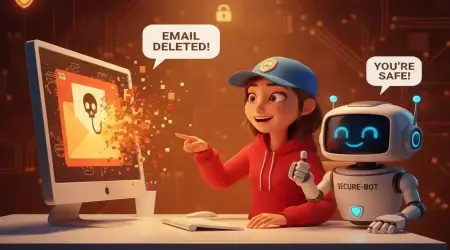
When confronted with a suspicious prize notification, the safest and quickest defense is non-engagement. If the offer triggers the "too good to be true" instinct, it is mandatory to delete the message immediately without clicking the link or attempting to reply [Image]. Engaging in any way, even by replying to confirm the message is a scam, verifies to the criminal that the communication channel is active and monitored, increasing the recipient’s value as a future target. Similarly, users should never use contact information supplied within the suspicious message to "verify" the claim; instead, they should conduct an independent search for the official company contact details.
4.2. Securing Your Digital Footprint with Temporary Email
A critical component of modern defense involves compartmentalizing digital identity. The reception of unsolicited prize scam emails or texts often signals that the user's contact information has already been gathered through a data scrape, a leak, or a fraudulent third-party sign-up.3
Utilizing disposable email services (temporary mail) provides a protective barrier, preventing the user’s primary, valuable email address from ever reaching the lists targeted by phishing campaigns. By using a temporary address for non-essential registrations, sweepstakes entries, or forum sign-ups, users minimize the likelihood of their real inbox becoming a vector for such low-stakes phishing attempts. This strategic use of temporary email effectively shifts the defensive strategy from reactive detection (spotting the red flag) to proactive prevention (preventing the scam message from reaching the primary, sensitive inbox). Detailed resources on this preventative measure can provide consumers with comprehensive knowledge on how temporary emails prevent spam and phishing registration attempts:(https://tempmailmaster.io/post/what-is-temporary-email-how-it-works-and-why-you-should-use-it).11
Furthermore, for those engaging with genuine, low-risk sweepstakes, using a temporary email address ensures that if the contest organizer experiences a data breach, the resulting deluge of spam and potential phishing attacks is directed to the disposable account, protecting the user's long-term digital identity from compromise. The undeniable benefits of adopting this approach for high-risk online activities are explored further in:(https://tempmailmaster.io/post/top-7-undeniable-benefits-of-using-a-disposable-email-today-with-tempmailmaster-io).11
4.3. Recognizing Social Engineering Cues (Advanced Self-Defense)
Digital security hinges on consistent skepticism regarding unsolicited requests. It is a mandatory protocol to never provide personal identifying information (PII), passwords, or financial account details in response to an unsolicited request, regardless of whether the request is received via telephone, email, or a web form.7 Phishing emails and internet pages are frequently identical in appearance to the legitimate source; reliance on visual recognition is insufficient.
In situations where a contact appears legitimate—such as a notification from a recognized financial institution or major retailer—the consumer must perform independent verification. This requires locating the official, publicly listed contact number for the company (not the number provided in the suspicious message) and calling the organization directly to verify the claim.7 Understanding the core methods through which criminals manipulate victims is crucial for self-defense:(
https://tempmailmaster.io/post/what-is-phishing-a-complete-guide-to-protecting-yourself).11
Part V: Emergency Response Protocol: What to Do If You Paid the Fee
The risk associated with paying the small shipping fee is not the $4.95 lost, but the critical credit card data harvested. If financial information has been disclosed, the victim must initiate an immediate, coordinated emergency response to mitigate severe identity theft.
5.1. Critical First Steps: Financial Institution Notification
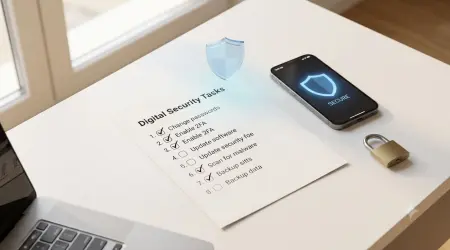
The single most urgent step following a financial disclosure is to contact the bank or credit card company immediately [Image]. The victim must report the fraudulent charge and explicitly request that the compromised credit or debit card be permanently canceled to prevent any future unauthorized charges.7 Given that the scammer now possesses a validated card number, they are likely to initiate larger transactions or sell the data swiftly. Therefore, continuous and regular review of all account statements is mandatory to ensure the initial unauthorized charge is the only one present.7
5.2. Mitigating Identity Theft: Fraud Alerts and Security Freezes
Since the incident involved the disclosure of financial information, identity theft prevention becomes the paramount concern. Victims must immediately place a fraud alert on their credit files. This requires contacting one of the three major credit bureaus (Equifax, Experian, or TransUnion).12 The fraud alert signals potential credit grantors that the identity may be compromised, prompting them to take extra steps to verify the identity of anyone seeking credit in the victim's name.13
- Equifax Fraud Division: (800) 525-6285.
- Experian Fraud Division: (888) 397-3742.
In addition to a fraud alert, victims should strongly consider placing a free security freeze on their credit report.13 A security freeze is a more aggressive measure that prevents lenders and other third parties from accessing the credit report entirely. This is highly effective at stopping thieves from successfully opening new lines of credit, loans, or credit cards in the victim’s name until the freeze is temporarily or permanently lifted by the consumer.13
5.3. Reporting the Crime: Alerting Federal and Local Authorities
Reporting the incident is not only crucial for documentation but also vital for law enforcement efforts aimed at tracking and prosecuting these criminal organizations. All instances of suspicious contact, fraud, and identity theft resulting from this scam must be reported to the Federal Trade Commission (FTC).14
- FTC Fraud Reporting: Consumers should report fraud, scams, and bad business practices at ReportFraud.ftc.gov.14
- Identity Theft Reporting: If the disclosure places the victim at high risk of identity theft, they should also utilize IdentityTheft.gov.14
Reports filed with the FTC are entered into the Consumer Sentinel database, which federal, state, and local law enforcement agencies across the country utilize to investigate and bring cases against systematic fraud and bad business practices.15 Immediate reporting contributes significantly to the overall effort to dismantle these phishing operations.
The following flowchart outlines the mandatory action steps required following the compromise of financial data:
Emergency Response Flowchart: Action Steps Following Card Compromise
Valuable Frequently Asked Questions (FAQs)
Q: Is it illegal for a company to charge a shipping fee for a legitimate sweepstakes prize?
A: Yes. Under U.S. federal laws governing lotteries and contests, a legitimate sweepstakes is expressly prohibited from requiring a winner to pay any money, including fees for "shipping," "processing," or "taxes," or make a purchase to receive a prize.2 Any charge requested upfront is the clearest indicator of fraud.
Q: How long does it usually take for scammers to use my credit card details after I pay the shipping fee?
A: The validation of your credit card details happens almost instantly with the initial small charge. Scammers or the fraud rings to whom they sell the data are highly motivated to use the credentials before the card is canceled. Unauthorized purchases can begin within hours or days. This immediacy mandates that card cancellation must be the victim’s absolute first step after realizing the compromise.7
Q: I clicked the link but didn't enter my credit card information. Am I safe?
A: You are safe from immediate financial loss, but clicking the link confirms your email address or phone number is active and monitored, making you a more valuable target for future scams. Furthermore, malicious links can sometimes attempt to download malware onto your device. It is prudent to run a full anti-malware and antivirus scan on the device used to click the link. Going forward, it is highly recommended to utilize a disposable email service to intercept future phishing attempts and protect your primary contact details.
Q: Should I respond to the text message to tell them they are scammers?
A: Absolutely not. Responding to the message, even to express anger or hostility, confirms to the sender that your contact number or email address is live, active, and read by a human being. This information increases your value on spam lists and leads to future, potentially more targeted, scam attempts. The correct protocol is to delete the message and, if possible, block the sender immediately [Image].
Q: What is the difference between placing a fraud alert and a security freeze?
A: A fraud alert is a notification placed on your credit file that requires businesses to take extra steps to verify your identity before extending credit in your name, serving as a cautionary flag. A security freeze is a much stricter measure that completely locks down your credit report, preventing any lender or service provider from accessing it. This blocks thieves from opening new accounts in your name entirely, though you must temporarily lift the freeze if you legitimately wish to apply for credit.13
Conclusion: The True Value of Vigilance
The persistence of the "You've Won a Prize!" shipping fee scam highlights the continuous adaptation of advance fee fraud in the digital realm. This mechanism is a masterclass in low-stakes social engineering designed to achieve the high-stakes outcome of stealing a consumer's credit profile. Organizations executing these scams rely not on brute force, but on manipulating emotional responses like excitement and urgency, paired with deceptive technical tactics like typosquatting.
The consumer’s defense must, therefore, be multi-layered and immediate. It begins with fundamental skepticism and the recognition that the cardinal rule of consumer protection remains inviolable: real prizes are always free, and the request for any "shipping fee" is a definitive act of fraud.2 The defense must also integrate technical awareness, requiring a critical analysis of URLs before clicking, and, most importantly, proactive identity protection. By deploying compartmentalization strategies, such as utilizing
temporary email addresses to shield primary inboxes from potential spam and phishing list accumulation, consumers can significantly reduce their initial exposure to these threats.
If a compromise occurs, immediate and decisive action—canceling the credit card and implementing credit fraud alerts or freezes—is mandatory, shifting the focus from the nominal financial loss to the long-term defense against catastrophic identity theft. Vigilance is not paranoia; it is the essential currency of digital security in a world where sophisticated fraudsters continuously seek to exploit the interface between human trust and digital convenience.
Written by Arslan – a digital privacy advocate and tech writer/Author focused on helping users take control of their inbox and online security with simple, effective strategies.