AI Voice Scam Trauma: The Full Financial Cost
Beyond the $17K Loss: The Full Financial and Psychological Trauma of AI Voice Scams (Vishing)
I. Executive Summary: The AI Voice Cloning Catastrophe
The digital threat landscape has undergone a radical transformation with the advent of easily accessible Generative Artificial Intelligence (AI) tools. These capabilities have been rapidly integrated by cybercriminals, resulting in the most insidious form of personalized financial fraud to date: AI Voice Cloning, often referred to as Vishing 2.0. This new breed of scam exploits not only technological sophistication but also deeply ingrained human emotional vulnerabilities, leading to catastrophic financial and psychological outcomes for victims.
The scale of this threat is alarming. Imposter scams, the broad category under which AI Vishing primarily operates, are a dominant force in modern fraud, accounting for $2.95 billion in losses reported to the Federal Trade Commission (FTC) in 2024, positioning it as the second-highest loss category.1 The high conversion rate associated with voice deepfakes provides a stark measure of their effectiveness; globally, one in ten adults has reported encountering an AI voice scam, and a striking 77% of those targeted ultimately reported suffering financial losses.2 This high success rate demonstrates that the realism achieved by synthetic voice technology dramatically accelerates victim compliance, surpassing the effectiveness of traditional phishing methods.
This report analyzes the full cost of this trauma, moving Beyond the $17K Loss. This figure represents the mean individual loss sustained by elderly victims targeted by a stranger-initiated financial exploitation (EFE).3 While this average is devastating, it fails to account for the comprehensive fallout, which includes the often-invisible burdens of administrative time, the destruction of creditworthiness, the necessity of legal defense, and the profound, sometimes debilitating, psychological trauma experienced by victims and their families.
The integration of AI technology has effectively optimized the criminal process. By eliminating traditional scam warning signs—such as robotic voices, grammatical errors, or foreign accents—AI-powered cloning injects a potent dose of realism into the scheme.5 This enhanced believability bypasses victims' critical, rational defenses, accelerating the timeline from initial contact to successful financial transfer and leading to higher payout rates than previous generations of fraud attempts. The analysis indicates that the sophistication of these schemes requires a layered defense strategy that addresses both technological hygiene and psychological preparedness.
II. Decoding the Deepfake Voice: The Mechanism of AI Vishing (Vishing 2.0)
A. The Technical Threat: Three Seconds to Fraud
AI voice cloning scams rely on readily available text-to-speech AI engines that can replicate human speech with uncanny precision.6 The technology’s accessibility and low barrier to entry make it a powerful tool for cybercriminals. Researchers have demonstrated that only three seconds of a person’s audio is needed to clone their voice convincingly.8
The voice recordings used to train these cloning models are often sourced directly from public life. Threat actors actively discover and leverage publicly available audio data, which frequently includes voicemails, meeting recordings, or videos posted on public social media channels.6 The scale of data availability is vast, given that over half (53%) of adults globally share voice data online at least once per week.2 This massive digital footprint ensures that criminals have ample high-quality source material to create synthetic voices.
B. The Vishing Strategy: Voice Phishing and Technological Camouflage
Vishing, short for "voice phishing," is a social engineering attack that uses a voice-based approach—phone calls or voicemails—to deceive individuals into divulging sensitive data, initiating malicious actions, or transferring funds.6 AI technology has elevated Vishing by incorporating technological camouflage techniques to mask the actor's identity and increase the sense of legitimacy.
One of the primary tools utilized is Caller ID Spoofing, where scammers manipulate the caller ID system to display trusted names, such as a known family member, the "IRS," or "Police Department".10 This tactic instantly creates a sense of authority and urgency, increasing the likelihood that the victim will engage. Furthermore, criminals leverage VoIP (Voice over Internet Protocol) technology, which allows them to mask their geographic location and scale their attacks by generating thousands of fake phone numbers simultaneously, enabling them to circumvent blocked numbers and target a wider audience faster than ever before.10 By coupling a genuine-sounding voice (the AI deepfake) with a trusted incoming number (the spoofed Caller ID), the scam becomes exponentially harder to recognize.
C. The Emergency Script and Psychological Exploitation
The strategy employed in AI Vishing is fundamentally one of psychological manipulation. Scammers construct highly emotional scenarios—known as emergency scams—where the victim receives a call from what sounds exactly like a panicked loved one who claims to be in immediate trouble, such as being arrested, kidnapped, or injured in a foreign accident.9
The ultimate goal of this script is to exploit urgency and fear, thereby successfully "hacking the limbic system" of the target and overriding their rational judgment.12 The scammer counts on the victim acting quickly and emotionally to help their distressed family member without pausing to verify the truth. A critical component of this manipulation is the demand for secrecy; the victim is often instructed to keep the request quiet, preventing them from discussing the situation with other family members or authorities who might recognize the deceit.13
The effectiveness of these attacks is rooted not just in the voice quality, but in the highly personalized nature of the narrative. To craft a script convincing enough to necessitate immediate action, scammers must first acquire specific personal identifying information (PII)—names, family relationships, and recent activities. The voice cloning technology then serves as the final, powerful validation tool, confirming the already plausible narrative and acting as the closer to guarantee the financial transfer. This establishes PII protection as the critical upstream defense against these schemes.
III. Quantifying the Loss: The $17,000 Anchor and the Macro-Picture
A. Pinpointing the $17K Anchor Loss
The figure of $17,000 serves as a powerful indicator of the financial devastation wrought by these scams. This number represents the mean individual monetary loss reported in cases of Elder Financial Exploitation (EFE) where the suspect was a stranger.3 Since AI voice scams, particularly "grandparent scams," are stranger-initiated imposter attacks that heavily target individuals aged 60 and over 12, this $17,000 average underscores the disproportionately high financial risk borne by this demographic.
Fraud losses increase significantly with age, partly because older adults often possess greater stored wealth targeted by criminals.17 While the $17,000 figure is specific to stranger-initiated EFE, the overall average loss for all elder fraud victims (60 and over) in 2023 was reported to be $33,915, contributing to a staggering total loss of over $3.4 billion in that demographic alone.12
B. The Macro-Economic Damage and Growth Trajectory
The impact of AI-enabled fraud extends far beyond individual losses. Consumers reported losing more than $12.5 billion to fraud in 2024, marking a 25% increase compared to the previous year.1 Imposter scams alone accounted for $2.95 billion of that total.[1] Financial institutions are equally threatened, with analysts predicting that the enablement of fraud via Generative AI tools could drive U.S. banking fraud losses to reach **US$40 billion** by 2027.19
Evidence also shows that high-loss events are escalating dramatically. Losses reported by older adults (aged 60 and over) who lost $10,000 or more increased more than four-fold between 2020 and 2024, with cumulative losses exceeding $100,000 increasing eight-fold during the same period.20 This data indicates a strategic focus by criminals on extracting maximum value from vulnerable targets.
C. The Wire Transfer Devastation: Irreversible Payments
The payment methods requested by AI Vishing scammers are intentionally chosen for their speed and irreversibility. Scammers often insist on payment via wire transfers, gift cards, payment apps, or cryptocurrency.14 These methods are preferred because wire transfers are nearly instantaneous, allowing criminals to move funds and withdraw them before the victim can realize the deceit and file a report.21
Americans lost over $311 million to wire transfer fraud in 2022 alone, underscoring the effectiveness of this method.21 Cryptocurrency payments present an even greater recovery challenge, as they are typically not reversible once executed.22 The use of these high-velocity, irreversible methods ensures maximum profit extraction, proving that AI Vishing is strategically designed to target individuals who possess higher stored wealth and can be emotionally manipulated into bypassing standard financial protocols.
Table 1: Contextualizing the Financial Loss of AI Vishing and Imposter Scams
IV. The Invisible Scars: Psychological Trauma and Emotional Aftermath
The true cost of AI voice cloning fraud transcends monetary metrics. These attacks are engineered to be psychologically devastating, weaponizing the deep emotional bonds between family members. The resultant suffering constitutes a major, often overlooked, layer of trauma.
A. Hacking the Emotional Core
AI voice cloning attacks are inherently more traumatic than other forms of phishing because they force the victim to confront the realistic simulation of a loved one in acute crisis.24 The intense emotional manipulation causes significant mental health fallout, including clinical depression, anxiety, post-traumatic stress, and long-term isolation, especially when the financial loss is substantial.26 The rapid progression of the scam—often occurring entirely during a single phone call—leaves the victim with little time to process the event, compounding the trauma.
Upon realizing the deception, victims frequently internalize the failure. Reports indicate that over half (52%) of victims admit feeling deeply embarrassed or ashamed, despite the fact that sophisticated identity fraud is often beyond the capacity of the average person to detect or thwart.27 This shame is compounded by the belief that they failed to protect their family member during a perceived emergency.
B. Isolation and the Erosion of Trust
The psychological fallout creates a dangerous cycle of isolation and generalized distrust. Victims frequently report profound suspicion toward others in their lives: 34% feel unable to trust friends, and 33% report feeling suspicious of family members.27 This pervasive erosion of trust can lead to social withdrawal, severely impacting the victim's social stability and, in some cases, their ability to earn a living. One documented case involved a victim who quit an online business to curtail activity and prevent further identity theft, demonstrating a tangible loss of income stemming purely from psychological fear.27
The emotional damage precipitated by these scams often leads to secondary financial losses that are not tallied in the initial fraud reports. These secondary costs can include fees for mental health care services (to treat anxiety, depression, and trauma) and the tangible financial burden of lost income resulting from social withdrawal and the potential reduction in cognitive ability needed to manage complex financial affairs during the recovery period. The psychological cost is therefore not a static byproduct, but a dynamic factor that actively impairs the victim’s ability to recover their financial standing.
V. The Administrative and Financial Aftershocks (Hidden Costs)
Moving beyond the core financial loss and emotional trauma, victims face a complex web of administrative burdens and hidden costs that further complicate recovery and prolong the ordeal.
A. Direct Out-of-Pocket Expenses and Lost Time
The resolution process for identity theft and financial fraud is lengthy and expensive, even after the initial loss is reported. Victims incur an average of $202 out of pocket simply to resolve the fraud.28 These expenses typically cover necessary administrative actions such as legal fees, notary costs, postage for certified letters, and covering small fraudulent debts that were not fully reimbursed by financial institutions.28
Furthermore, victims must dedicate significant time to the complex administrative task of reporting the fraud, disputing unauthorized accounts, and correcting erroneous records. While simple credit card fraud might be resolved quickly, complex cases involving loan applications, new account openings, or tax fraud can require dedicated effort spanning months or even years to fully restore the victim’s identity and financial records.27
B. Credit and Criminal Record Liability
AI Vishing attempts often serve as a signal for imminent, deeper identity theft. If a scammer obtains sufficient PII and a voice sample to execute a high-level Vishing attack, they likely possess enough information to attempt a full spectrum of identity fraud.29
The consequences include severe credit damage. If a fraudster successfully uses the victim's PII to open new loans, credit cards, or lines of credit, the ensuing failure to pay will appear on the victim's credit report, causing rapid damage to their credit score and undermining future borrowing capacity.27 More severely, criminal identity theft occurs when criminals use stolen PII to commit actual crimes, potentially leading to the victim facing unexpected arrests, legal troubles, or the creation of a false criminal record that can jeopardize future employment opportunities via background checks.27 Victims may also suffer from medical identity theft, where stolen information is used to obtain medical treatment or prescriptions, burdening the victim with complex insurance fraud and billing nightmares.31
C. Proactive Defense: The Power of the Free Credit Freeze
Recognizing that a Vishing attack often precedes wider identity fraud, the immediate administrative step of securing one's credit is vital. A credit freeze (or security freeze) is an essential defensive tool that prevents new creditors from viewing the victim's credit report, effectively blocking the creation of new accounts in their name.32
Crucially, federal regulations now mandate that placing, temporarily lifting, and permanently removing a credit freeze with the three major credit bureaus (Equifax, Experian, and TransUnion) must be free of charge.34 A credit freeze does not affect the victim's credit score and is a powerful, zero-cost method of preventing future financial account fraud. Victims may also place a free initial fraud alert, which lasts one year and requires businesses to verify the identity of the applicant before granting credit.34 It must be noted, however, that a credit freeze only prevents new account fraud; victims must still diligently monitor existing accounts for signs of takeover fraud.33
Table 2: The Multi-Layered Costs of AI Vishing Fraud (The Full Trauma Profile)
VI. The Defense Matrix: Proactive Prevention Strategies
Effective defense against AI Vishing requires a blend of social awareness and digital compartmentalization, specifically targeting the emotional vulnerabilities exploited by the cloning technology.
A. The Crucial Code Word: The Non-Negotiable Defense
The single most effective, non-technical defense against AI voice cloning is the establishment of a secret, pre-arranged, verbal codeword or phrase known only to immediate family members.8 If a panic or emergency call is received requesting money, the recipient must immediately demand the codeword. The absence of this word instantly invalidates the call, regardless of how convincing the cloned voice may sound.
Security experts stress that this codeword must be truly random and unguessable. Easily discoverable identifiers—such as a street name, an alma mater, or a childhood pet’s name that might be available through public records or social media—must be strictly avoided, as criminals actively mine this information during the initial PII gathering phase.12
B. Verification Protocol: The Hang Up, Call Back Rule
Scammers rely on the victim's compliance under duress, often pressuring them to act immediately and swear to secrecy.13 The key to breaking this pressure cycle is to resist the urgency. The protocol is simple and non-negotiable: Hang up the phone immediately.13
The next step involves independent verification. The victim must contact the loved one using a verified, known phone number, such as a cell or home number already stored in their personal contacts.9 It is critical not to call the number that just contacted them, as it is likely spoofed. If the loved one cannot be reached directly, the victim should immediately contact another trusted family member or friend to confirm their location and safety, even if the scammer expressly forbade it.13
C. Digital Footprint Management and PII Compartmentalization
As cloning models feed on publicly available voice recordings, reducing one’s digital footprint is a proactive necessity. Individuals should limit the exposure of voice recordings and videos on public social media channels, thereby starving AI cloners of the audio data they require.9 Similarly, switching personalized voicemails to automated, generic messages helps prevent wardialing systems from collecting high-quality voice samples.36
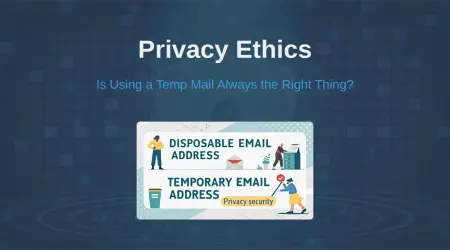
The analysis confirms that the success of Vishing is contingent upon the acquisition of PII, often harvested from data leaks or compromised online accounts. Implementing stringent digital compartmentalization strategies to protect one’s primary identity is a critical upstream defense. This involves using secure, temporary, or secondary email addresses for low-value online sign-ups, subscriptions, and non-critical services. By segmenting one’s digital life, the potential for a large-scale PII breach that feeds sophisticated social engineering attempts is significantly reduced. Readers can explore detailed techniques for protecting their core digital identity and limiting PII exposure by implementing secondary email strategies: https://tempmailmaster.io/.
D. Technology and Legislative Defenses
While consumers must remain vigilant, technology is also emerging as a countermeasure. Solutions leveraging voice biometrics technology can identify inconsistencies in speech patterns or mismatched audio features, effectively countering deepfake-enabled vishing campaigns by assigning a “liveness score” to real-time audio input.10 However, consumers must exercise caution regarding accounts that use voice biometrics for verification, as these saved voice samples can themselves become targets for specialized attackers.6 Legislative action is also underway; regulatory bodies like the FTC and FCC are increasingly recognizing AI fraud risks and proposing rules to deter and halt deceptive voice cloning practices.7
Table 3: The 3-Step AI Voice Scam Verification Protocol
VII. Recovery and Recourse: Post-Scam Triage
Once a fraudulent transaction has occurred, immediate and aggressive action is required to maximize the slim chance of fund recovery and minimize further identity damage.
A. The Immediate Response (The 48-72 Hour Window)
Time is the most critical factor, especially concerning wire transfers. Victims must immediately contact the financial institution where the fraud originated—the bank, credit card issuer, or money transfer company (such as Western Union or MoneyGram)—to report the transaction as fraudulent and request an immediate reversal.22
For wire transfers, a specific window of opportunity exists. If the theft was recent, particularly within the first three to four days, the victim should reach out to their local FBI field office directly. Federal investigators may be able to work with the financial institution to reverse the wire transfer before the funds are fully liquidated by the criminal organization.22 This immediate reporting is essential, as the standard institutional response often lags significantly behind the speed of AI-enabled cybercrime.
B. Essential Official Reporting (The Digital Paper Trail)
A comprehensive paper trail is necessary for investigation, disputes, and potential legal action. The following reports must be filed without delay:
- FBI/IC3: File a detailed complaint with the Internet Crime Complaint Center (IC3.gov). The IC3 serves as the centralized federal hub for reporting cyber-enabled crime. The report must include all relevant details, including the fraudulent account numbers involved in the transfer.22
- FTC: File a report with the Federal Trade Commission at ReportFraud.ftc.gov. This helps federal agencies track trends and use their authority to investigate bad actors.40
- Local Law Enforcement: File a police report. A formal police report is frequently required by financial institutions and insurance companies to initiate dispute processes or coverage claims.41
C. Legal and Legislative Recourse
The legal landscape is rapidly adjusting to address the complexities of AI fraud. While victims should contact their local bar association for legal advice, emerging trends in state legislation indicate a pathway for victims seeking recovery.40 Some jurisdictions are introducing specific civil causes of action for financial exploitation involving AI-generated media. These laws allow victims to recover lost damages and attorney's fees, addressing the historical difficulty in prosecuting or obtaining restitution for victims of digitally enabled fraud.42
Finally, victims must maintain vigilance against secondary fraud schemes. After suffering a loss, victims are frequently targeted by "Refund and Recovery Scams." It is imperative to remember that official government entities, including the FTC and the IC3, do not contact victims offering to recuperate lost funds for a fee, tax, deposit, or retainer.39
VIII. Valuable Frequently Asked Questions (FAQs)
Q1: How much audio is needed for an AI voice cloning scam?
Cybercriminals often require as little as three seconds of audio, typically harvested from public social media profiles or voicemails, to clone a voice convincingly using readily available AI tools.8 This minimal requirement highlights the extreme vulnerability created by sharing voice data online.
Q2: Can I get my money back if I wired funds to an AI voice scammer?
Wire transfers are extremely difficult to reverse because they are designed to be instantaneous and irreversible.21 You must contact your bank and file a report with the FBI (IC3) immediately—within 48 to 72 hours—for the only chance of fund interception before the funds are moved overseas or liquidated.22
Q3: Does placing a credit freeze cost money?
No. Placing, temporarily lifting, or permanently removing a security freeze on your credit report with the three major credit bureaus (Equifax, Experian, TransUnion) is mandated to be free of charge and does not impact your credit score.34 A credit freeze is a vital, zero-cost defense against identity theft.
Q4: What is the most effective proactive defense against an AI emergency scam?
The most effective proactive defense is the utilization of a pre-arranged, secret family code word that the scammer cannot possibly know or guess from social media or public records.8 Always combine this with the "Hang Up, Call Back" verification protocol to confirm the loved one's safety independently.13
Q5: Why do AI scams cause so much psychological harm?
These scams are highly emotionally manipulative because they exploit the deep bond between the victim and the loved one being impersonated. The resulting belief that the victim failed to protect a family member during a crisis often leads to intense shame, isolation, anxiety, and long-term psychological distress.26
Q6: What is vishing and how is it different from phishing?
Vishing (Voice Phishing) uses voice—phone calls or voicemails—to trick individuals into divulging sensitive information, whereas phishing utilizes text-based communications like email. AI deepfakes have made Vishing significantly more realistic and potent than earlier voice-based attacks, as the cloned voice eliminates traditional human "tells".6
IX. Conclusion: Adapting to the Conversational Age of Cybercrime
The rise of AI voice cloning represents a pivotal, sophisticated evolution in cybercrime, marking a fundamental strategic shift from broad technical exploitation to targeted emotional subversion. The analysis confirms that the total devastation caused by these attacks extends significantly "Beyond the $17K" average financial loss, embedding itself in the profound psychological trauma, compromised identities, and multi-year administrative burdens placed upon the victim. Future defense strategies must recognize this confluence of technology and social engineering.
Survival in this conversational age of cybercrime necessitates a layered defense structure. First, non-technical verification protocols, such as the family codeword, are non-negotiable bulwarks against deepfake realism. Second, rigorous technical hygiene, specifically the compartmentalization of one's digital footprint and the reduction of publicly available PII, is essential to starve criminals of the audio and personal context required to make their deepfakes believable. Finally, institutional responses must adapt swiftly; victims must be proactive, initiating immediate contact with financial providers and law enforcement, particularly within the critical 48-72 hour window, to maximize the chance of fund recovery. Vigilance, education, and immediate, decisive action remain the only effective strategy against this potent and devastating financial threat.
Written by Arslan – a digital privacy advocate and tech writer/Author focused on helping users take control of their inbox and online security with simple, effective strategies.